Beautiful Broken: Why Artists Are Weaponizing Digital Decay
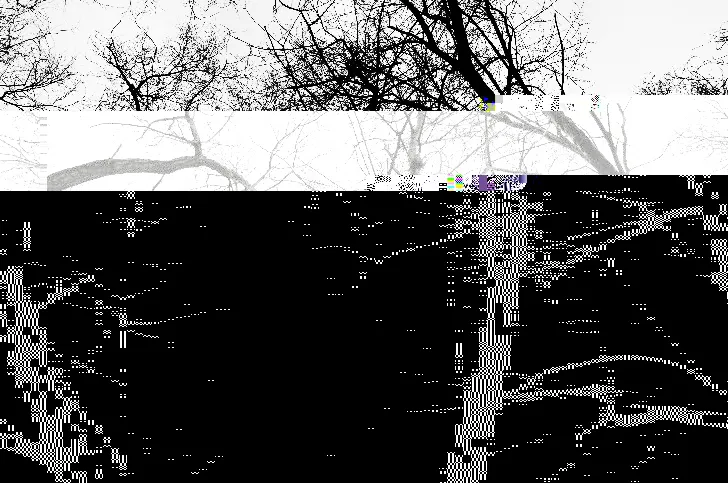
Photo: Lucas Rafael Tenllado Gil, CC BY-SA 4.0, via Wikimedia Commons
There's a moment right before your screen freezes — that half-second where colors smear, pixels scatter like confetti, and your carefully rendered reality dissolves into something that looks like a fever dream painted by a robot. Most of us curse and reach for the restart button. A growing community of artists? They hit record.
Glitch art isn't new, exactly. But it's having a moment that feels less like a trend and more like a reckoning. Across platforms, in gallery spaces from Brooklyn to Los Angeles, and deep in the rabbit holes of TikTok and Instagram, a generation of creators is deliberately breaking things to find out what lives inside the wreckage.
When the Error Is the Point
The philosophy behind glitch art is deceptively simple: systems fail, and failure is honest. When a JPEG degrades, when an MP3 stutters and warps, when a video file corrupts mid-frame — what you're left with isn't nothing. You're left with the raw material of the thing, stripped of its polish and pretense.
Artists like Rosa Menkman, whose theoretical work on glitch aesthetics has been circulating in academic and underground circles for years, argue that glitches reveal the hidden architecture of digital systems. It's not destruction — it's archaeology. You're digging into the code and pulling out something the original designers never intended anyone to see.
Databending — the practice of opening an image or audio file in software it was never designed for, then manipulating it — produces results that are genuinely impossible to replicate intentionally. You might open a photo in a text editor, change a few characters, and end up with something that looks like a Renaissance painting melting into a circuit board. The unpredictability is the whole appeal.
Gen Z and the Aesthetics of Imperfection
Here's something interesting about the generation that grew up entirely inside digital spaces: they don't trust perfection. Heavily filtered Instagram photos feel fake. Overproduced pop music feels hollow. There's a cultural appetite for texture, roughness, evidence that a human hand — or a malfunctioning machine — was actually involved in making something.
Glitch music taps directly into this. Artists in the noise and experimental electronic scenes have been deliberately corrupting audio for decades, but the aesthetic has filtered into mainstream spaces in ways that would've seemed bizarre ten years ago. The stuttering, clipped vocals and intentionally degraded beats showing up in underground SoundCloud releases and experimental Spotify playlists aren't accidents. They're choices.
For a generation raised on the concept that authenticity is the highest value, a glitch is basically proof of life. It says: this wasn't generated by an algorithm trying to please you. Something actually happened here.
The Philosophical Roots Run Deep
If you trace the intellectual lineage of glitch aesthetics back far enough, you end up in some genuinely interesting territory. Japanese wabi-sabi philosophy — the idea that imperfection and transience are beautiful — gets cited a lot, and the connection isn't superficial. Both frameworks ask you to find meaning in things that are incomplete, worn, or broken.
There's also a strong thread of Dadaism running through contemporary glitch culture. The Dadaists believed that art created through chance and disruption was more honest than art created through intention, because intention is always contaminated by ego and expectation. When you databend a file or deliberately corrupt a video stream, you're surrendering control in a way that would've made Marcel Duchamp nod approvingly.
And then there's the more contemporary angle: glitch art as critique. In a media landscape dominated by seamless, frictionless content designed to keep your attention locked and your emotions managed, work that breaks the spell — that forces you to notice the mechanism — functions as a kind of resistance. The glitch interrupts. It makes you aware that you were being shown something constructed.
Where the Movement Lives Right Now
The glitch art community is genuinely decentralized in ways that feel appropriate for the work itself. You'll find it on Tumblr archives that haven't been updated since 2019 but still get thousands of visits. You'll find it in experimental music festivals in cities like Chicago and Portland. You'll find it in the comment sections under certain YouTube videos where someone has deliberately uploaded a corrupted file and let the platform's compression algorithms make it stranger.
There are dedicated communities on Discord servers where members share databending tutorials, compare results, and debate the ethics of using AI-generated imagery as raw material for glitch manipulation. The toolsets range from sophisticated custom software to literally just dragging files into the wrong applications and seeing what happens.
Galleries are catching up, slowly. The institutional art world has a complicated relationship with digital work in general — the question of how you sell, preserve, and authenticate something that exists as a file remains genuinely thorny. NFTs briefly seemed like an answer, but that conversation got complicated fast. Still, glitch-influenced aesthetics are showing up in commercial design, music video direction, and fashion campaigns with increasing frequency.
Signal, Noise, and Meaning
Maybe the most interesting thing about glitch art is what it says about how we understand meaning. We're trained to look for meaning in coherence — in things that hold together, that resolve, that make sense. A glitch refuses to do any of that. It sits there, broken and strange, and asks you to do the interpretive work yourself.
That's uncomfortable for some people. It's exhilarating for others.
At Loyeyvk, we spend a lot of time thinking about what happens at the edges of things — where the signal breaks down and something else takes over. Glitch art lives exactly in that space. It's not about the failure itself. It's about what you find when you stop trying to fix everything and start actually looking at what's there.
The screen freezes. The pixels scatter. And somewhere in that visual noise, if you're paying attention, something is trying to tell you something.