Digging Through Digital Ruins: The People Racing to Save the Internet Before It Disappears
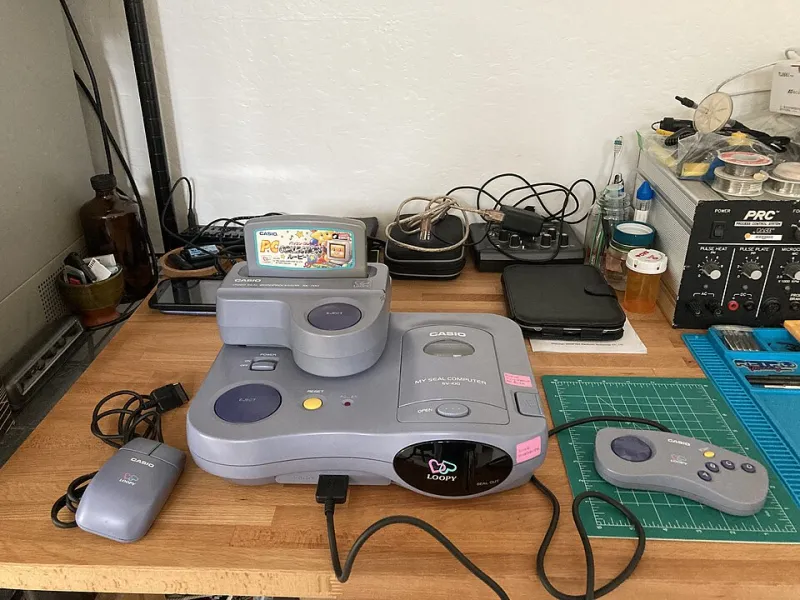
Photo: Carlos Noguera, CC BY-SA 4.0, via Wikimedia Commons
In 2009, Yahoo deleted GeoCities. Around 38 million user-created pages — homemade fan sites, personal journals, hobbyist corners of the web that had been built and tended for over a decade — were wiped in one of the single largest acts of digital demolition in history. Most of it is gone. Some of it, thanks to a frantic volunteer effort in the final weeks before shutdown, survived.
That rescue operation planted a seed. The community that grew from it is still going, still digging, and — depending on who you ask — still in a race against time.
What Gets Lost When a Website Dies
The internet feels permanent. It doesn't feel like something that can just... disappear. But the churn rate of online content is genuinely staggering. Studies have found that roughly a quarter of all links posted on the web become inaccessible within a year. Pages migrate, domains expire, platforms shut down. The specific texture of any given moment in internet culture — the forums, the personal homepages, the comment sections — has a shelf life that most people never think about until it's already gone.
What disappears with those pages isn't just data. It's context. It's the evidence of how people actually talked, what they cared about, what humor looked like before everything was optimized for reach. Early internet culture was weird, earnest, and deeply human in ways that are increasingly hard to find. Losing the record of it means losing something about ourselves.
This is the argument that drives the digital preservation community. And it's a community that, from the outside, looks like a pretty eccentric hobby. From the inside, it looks like urgent infrastructure work.
The Tools of the Trade
The most visible institution in this space is the Internet Archive, the San Francisco-based nonprofit that runs the Wayback Machine. If you've ever typed a dead URL into the Wayback Machine and watched an old version of a website materialize — complete with broken image placeholders and mid-2000s font choices — you've used their work. The Archive has crawled and stored hundreds of billions of web pages since 1996. It is, by almost any measure, one of the most important cultural preservation projects of the last thirty years.
But the Internet Archive can't catch everything. Its crawlers prioritize public-facing pages and miss huge swaths of the web — private forums, password-protected communities, platforms that blocked automated crawling. That's where the volunteers come in.
Tools like HTTrack, ArchiveBox, and Webrecorder let individuals mirror entire websites locally. Communities on Reddit, Discord, and dedicated forums coordinate large-scale rescue operations when platforms announce shutdowns. When Tumblr threatened major purges, when Vine shut down, when various gaming forums went dark — in each case, informal networks of archivists mobilized to pull down as much as they could before the lights went off.
"It's like being a first responder but for data," one archivist who goes by the handle Vaelthorn online told us. He's been doing this for about eight years and has personally archived several thousand pages, with a focus on early gaming communities from the late 1990s and early 2000s. "You hear a site is going down, and there's this adrenaline rush. You've got maybe two weeks, sometimes less. You just start pulling."
The Nostalgia Hunters
Not everyone in this world is motivated by pure preservation ethics. A significant part of the community is driven by something more personal: nostalgia, and the specific grief that comes from losing access to a piece of your own history.
MySpace is a fascinating case study here. When News Corp sold the platform and it underwent multiple ownership changes, enormous amounts of user data — photos, messages, music — were lost. A catastrophic server migration in 2019 wiped out roughly 50 million songs uploaded by independent artists between 2003 and 2015. For many musicians, that was their entire early catalog. Gone.
The response from the community was immediate and ongoing. Archivists have spent years tracking down cached versions, personal backups, and fragments of what survived. There are Discord servers dedicated entirely to MySpace recovery, where people post partial archives and compare notes on what's retrievable. It's slow, painstaking work, and it's never going to be complete. But pieces keep surfacing.
"Finding an old profile is like finding a time capsule someone buried in their backyard," says a hobbyist archivist based in Portland who asked to be identified only as Delray. "You're seeing how someone presented themselves online when the stakes felt totally different. It's intimate in a way that's hard to explain."
What the Ruins Reveal
Spend enough time in archived web content from the late 1990s and early 2000s, and a few things become undeniable. First: people were trying really hard. The personal homepages of that era — tiled backgrounds, animated GIFs, hand-coded HTML — represent an enormous investment of time and enthusiasm for spaces that had, by modern metrics, essentially no audience.
There was no algorithm to optimize for. No engagement dashboard. People built these pages because they wanted to exist on the internet in a specific way, and the results were gloriously idiosyncratic. Fan pages for obscure TV shows. Elaborate personal timelines. Webrings connecting communities of interest across hundreds of individual sites.
Compared to the content landscape of 2025 — where everything is produced for platform optimization and audience growth — the old web reads like folk art. Homemade, specific, and completely unconcerned with whether anyone was watching.
The archivists who spend time with this material tend to come away changed by it. Not just nostalgic, but genuinely reflective about what the evolution of the web has cost us alongside what it's given us.
The Race That Doesn't End
The preservation community is growing, but so is the scale of the problem. Every year, more platforms that hosted years of human expression make decisions that put that content at risk. Link rot accelerates. Services that promised permanence quietly sunset.
The Internet Archive itself has faced legal challenges that threaten its operating model. In 2024, a federal appeals court ruled against it in a case involving digital book lending — a decision that sent ripples of anxiety through the broader preservation community about what protections actually exist for this kind of work.
Still, the archivists keep going. They're motivated by something that's hard to fully articulate but easy to understand: the conviction that the record of how people lived online matters, that it deserves the same care we give to physical archives, and that if they don't do it, nobody will.
Somewhere in a folder on a volunteer's personal server, there's a GeoCities neighborhood that survived. Someone's fan page for a show that got canceled in 2001. A forum thread from 2004 where strangers talked each other through something hard. It's all still there — fragile, incomplete, and quietly extraordinary.
The signal broke a long time ago. These people are still listening for what it meant.