Stuck in the Buffer: How the Pause Before the Content Became the Whole Point
There's a specific kind of peace that settles over you when the screen freezes mid-load. The spinning circle. The horizontal bar crawling toward completion. The pixelated thumbnail that looks like a Renaissance painting someone left out in the rain. For a generation raised on instant delivery, you'd expect this moment to be pure frustration. Instead, something stranger is happening. People are lingering there. Some are even chasing it.
Call it the aesthetics of interruption. Call it liminal tech worship. Call it whatever you want — the fact is, the broken moment before the content arrives has developed its own quiet fan base, and the internet is starting to notice.
The Space Between Signals
If you've spent any time on design-forward corners of TikTok or the more experimental pockets of Tumblr that somehow survived the algorithm wars, you've probably seen it: loading screen edits. Buffering animations repurposed as mood boards. Error messages printed on tote bags. The spinning beachball of death reimagined as a kind of meditative mandala.
It's not ironic, exactly. Or at least not only ironic. There's something genuinely felt in the attachment people have developed toward these transitional graphics. They exist in a weird time-out zone — after you've made a choice but before the consequences arrive. You clicked the video, but the video hasn't happened yet. You're in the gap. And the gap, it turns out, has texture.
Designers have a word for these in-between zones: liminal spaces. Architecture has its version — empty malls at 2 a.m., hotel hallways, airport terminals in the dead hours. Technology has always had its own version too, we just never bothered to look at it.
Why Perfection Started Feeling Like a Problem
Here's the thing about seamless content delivery: it's relentless. The autoplay queue has no patience for you to process what you just watched. The algorithm doesn't buffer. It just keeps going, and going, and going, and somewhere in that relentlessness, the experience of receiving something got collapsed into nothing. Consumption without digestion. Watching without seeing.
Loading screens, glitches, buffering wheels — these are the involuntary pauses. They're the moments the machine can't optimize away, at least not entirely. And maybe that's precisely why they've started to feel like relief.
There's a growing creative conversation, mostly among younger designers and digital artists, about the value of deliberate friction. Not broken-by-accident friction, but friction as a design philosophy. The idea that making someone wait — even for two seconds — creates a relationship with what's coming. A small ceremony. A breath before the sentence.
Artists Who Are Building the Glitch on Purpose
Some creators aren't waiting for things to break. They're engineering the break themselves.
You've probably seen this in music videos that open with fake buffering sequences, or web-based art projects that simulate connection errors before revealing the actual work. There are graphic designers building loading screen aesthetics into their visual identity — progress bars that don't actually track anything, spinning icons used as decorative elements, low-resolution preview images kept permanently unresolved.
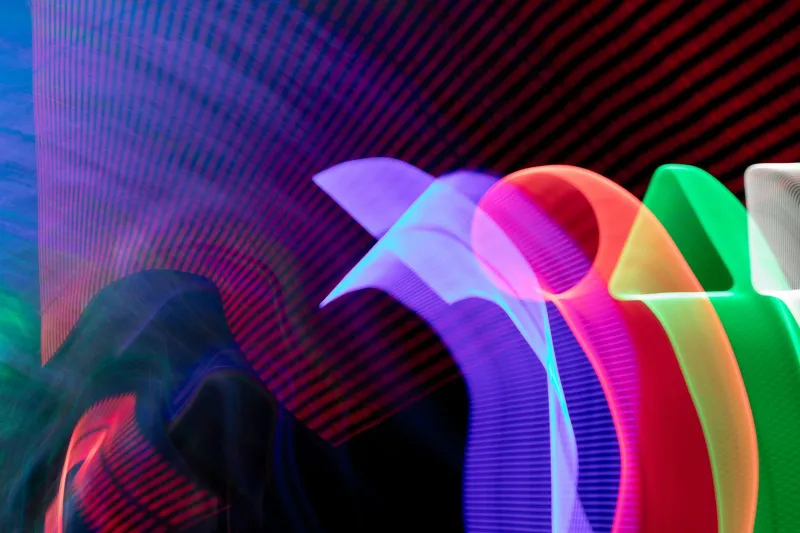
One popular approach on creative platforms involves what some designers are calling "soft glitch" — design work that looks like it's in the process of loading, perpetually mid-arrival, never quite snapping into the clean resolution you'd expect from finished work. It's the visual equivalent of a sentence that trails off into something more interesting than a period would have been.
The message embedded in that aesthetic is worth sitting with. It's saying: this isn't finished, and that's the whole point. The process is visible. The seams are showing. You can see the work happening in real time, or at least the illusion of it.
The Nostalgia Angle (But Make It Weirder)
Some of this is undeniably nostalgic. Dial-up loading bars. The old-school spinning hourglass cursor. The chunky pixelation of a 2003 video file buffering on a family desktop. These images carry a specific emotional weight for millennials and older Gen Z — a time when the internet felt like a place you traveled to rather than a layer permanently draped over reality.
But the appreciation for loading aesthetics goes beyond nostalgia tourism. Younger creators who have no personal memory of dial-up are drawn to these visuals for different reasons. There's something about the unpolished, in-progress quality that reads as honest in a way that finished, optimized content often doesn't. The loading screen doesn't perform. It just exists in its own awkward, functional moment, doing its job without pretending to be anything else.
In an environment where every piece of content is engineered to feel effortless and inevitable, something that looks like it's trying — visibly struggling toward completion — carries an almost radical authenticity.
The Poetry of the Progress Bar
Consider the progress bar for a second. Really look at it. It's one of the most honest graphics ever designed. It says: here is where you are, here is where you're going, here is the distance between. No metaphor required. No branding spin. Just a measure of time and effort rendered as a rectangle filling with color.
There's something almost moving about that simplicity when you set it against the baroque complexity of modern UI design. Everything else on your screen is trying to persuade you of something. The progress bar is just telling you the truth.
Artists working in the space between digital and physical — people making zines, doing web design, building small indie games — have started treating that visual grammar as raw material. Progress bars that track emotional states. Loading screens that ask questions while they stall. Error messages rewritten as poetry, which, if you've ever really read a 404 page, isn't much of a stretch.
What We're Actually Waiting For
Maybe the deepest thing the loading screen appreciation trend is pointing at is a hunger for pause that the rest of digital life doesn't provide. We've built an internet that never stops, never hesitates, never lets you sit in the not-knowing. Every gap gets filled. Every silence gets recommended content.
The buffer brings the gap back. Involuntarily, briefly, imperfectly — but it brings it back.
And in that gap, something interesting happens. You notice what you were feeling before the content arrived. You remember that you made a choice to be here. You exist, for two or three seconds, in the space between signal and meaning.
Which, if you think about it, is kind of where everything real happens anyway.
The loading screen was never really about waiting for the content. It was always a small reminder that the content wasn't the point. You were.