Everything You Actually Googled: The Secret Diary Living in Your Browser
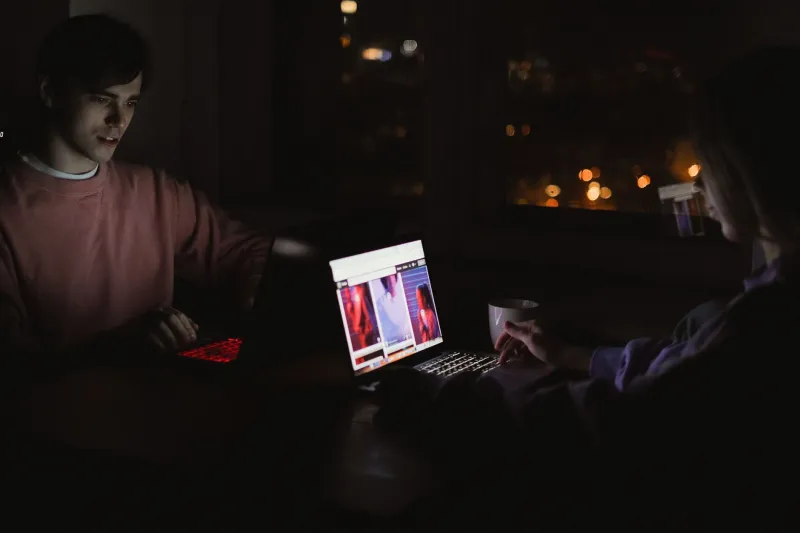
Somewhere between the version of yourself you post about and the version of yourself that actually exists, there's a text file. It's unstyled. It has no filters. Nobody curated it. It just logs, quietly and without judgment, every question you were too embarrassed to ask out loud, every symptom you searched at midnight, every apartment in a city you'll probably never move to.
Your browser history is the most honest document you've ever produced. And you almost certainly never meant to write it.
The Diary You Didn't Know You Were Keeping
Here's what's strange about traditional journaling: it's still a performance. Even when you're writing for no one, you're writing as someone. You choose words. You frame events. You decide what's worth recording and what gets quietly buried. The self that shows up in a diary is edited — not dishonestly, but inevitably.
Your browser history doesn't have that problem. It captures you in the middle of the impulse, before the internal PR team kicks in. That search for "is it normal to feel nothing at a funeral" happened because you needed to know, not because you wanted to document anything. The forty-five minutes you spent reading about careers you'll never pursue — marine biologist, glassblower, park ranger in Montana — got logged without your permission.
There's something almost anthropological about it. If a stranger got access to six months of your browsing data, they'd know things about you that your closest friends don't. Not because you're hiding from your friends, but because there's a whole interior life that never quite makes it to conversation.
What the Abandoned Cart Knows
Retail therapy has been analyzed to death, but the abandoned cart is the more interesting artifact. The thing you put in your cart and didn't buy tells a more complicated story than the thing you actually purchased.
You added the $300 standing desk converter. You left it there for eleven days. You came back to it twice. Then you closed the tab.
That's not a shopping decision — that's a negotiation with yourself about what kind of person you want to be, what your apartment says about your priorities, whether you're actually going to fix your posture or just keep meaning to. The cart that never became an order is a record of a conversation you had entirely alone.
The same logic applies to the Airbnb you bookmarked for a trip you never booked, the recipe you saved and never cooked, the Wikipedia rabbit hole about Cold War-era bunkers that somehow started with a search for good pasta recipes. These aren't distractions. They're data points about desire — what pulls at you when you're not performing for anyone.
2am Is a Different Browser
There's a reason the phrase "don't Google symptoms at night" has become a cultural cliché. Late-night browsing has a texture that daytime browsing doesn't. The inhibitions that keep us on-brand during waking hours loosen up somewhere around 1am, and what comes out is rawer.
The searches get more specific. More vulnerable. More strange. "How do you know if a friendship is actually over" at 2:17am is a different kind of question than anything you'd type in the afternoon. The midnight tab-spiral — health anxiety, estranged family member, old song you can't name, apartment listings in a city where you used to be happy — reads like a stream of consciousness that nobody edited.
Some researchers who study digital behavior have started calling this the "disinhibition effect" of late-night internet use. The platform stays the same. The algorithm stays the same. But you change, and the record of that change sits in your history, timestamped.
The Gap Between Performance and Truth
Social media has made us all very good at managing our public signal. We know which photos get engagement, which opinions are safe to share, which version of our weekend looks best in a caption. The gap between the performed self and the actual self isn't new — humans have been doing this forever — but digital platforms have made the performance more constant and more demanding.
Your browser history exists in the space where that performance breaks down. It's the signal after the signal. The thing that happens when you close the app and just... exist for a while.
There's something almost tender about it, honestly. The search history of a person going through something hard — the obsessive return to the same news story, the grief support forums visited and exited without posting, the how-to articles about things they've never told anyone they're struggling with — is a record of private survival. Nobody sees it. Nobody was supposed to.
What Happens When Someone Else Reads It
The intimacy of browser history becomes most visible when it becomes visible to someone else. Tech companies have known this for decades — it's the foundation of the entire behavioral advertising industry. Your search for "therapists near me" becomes a data point. Your browsing patterns around a health scare get sold before you've even processed what you're feeling.
That's the uncomfortable inversion. The most honest document you've ever produced is also the one being read most carefully — just not by anyone who knows you.
For a lot of people, the response to this has been to become more careful: private browsing, VPNs, the deliberate deletion of history. Which is rational. But there's also something lost in that. The unselfconscious record of yourself, the one that captured you in the middle of wondering and worrying and wanting things you can't quite name — that disappears too.
Reading Your Own Archive
If you've never scrolled back through a few months of your own browser history, it's a genuinely strange experience. Not in a shameful way, just in a revealing way. You find obsessions you forgot you had. You find the week everything clearly went sideways before you admitted it to yourself. You find evidence of a version of yourself who was seriously considering a very different life.
It's archaeology on a six-month time scale. And unlike a diary, it wasn't written for an audience — not even the audience of your future self. It just happened.
Maybe that's what makes it honest in a way that almost nothing else is. The signal didn't get cleaned up before transmission. It came through exactly as it was — fragmented, specific, a little embarrassing, and completely yours.
Somewhere in those deleted tabs and half-typed questions, there's a portrait. You painted it without meaning to. It's probably more accurate than the one you've been working on intentionally.