Doing Nothing on Purpose: How Boredom Became the Coolest Thing You're Not Posting About
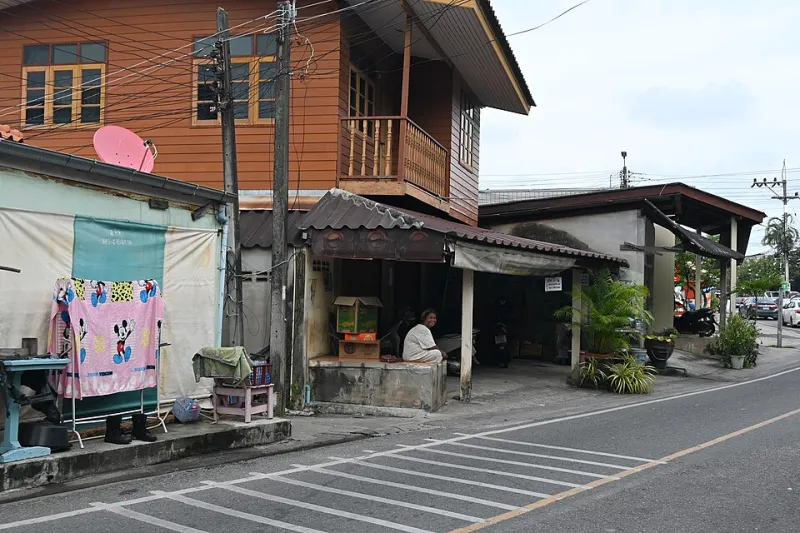
Photo: PattayaPatrol, CC BY-SA 4.0, via Wikimedia Commons
The Signal You Can't Measure
Somewhere between the fifteenth notification and the third autoplay video, something cracked. Not dramatically — no big announcement, no viral thread about it. Just a slow, private withdrawal from the idea that every waking moment deserves content. For a specific slice of young Americans, the most radical thing you can do right now isn't post something weird or niche or ironic. It's post nothing. Feel nothing engineered. Sit in a room and let your brain go genuinely, uncomfortably blank.
Boredom is having a moment. Except, almost by definition, you won't see it trending anywhere.
What the Attention Economy Did to the Nervous System
Spend enough time with people in their early twenties and a particular kind of exhaustion comes up constantly. It's not burnout in the classic sense — it's more like a specific sensory fatigue, the feeling of having been optimized at for too long. Algorithms that know your emotional triggers. Feeds calibrated to keep your eyes moving just fast enough that stopping feels wrong. Notification systems designed by people who study the same psychological literature as casinos.
The attention economy didn't just compete for time. It rewired what idle time feels like. Stillness started to feel like a malfunction. Boredom stopped being neutral and became something closer to anxiety — a gap that needed filling immediately, preferably with something shareable.
For a lot of young people, the response to that pressure isn't a digital detox retreat or a think-piece about mindfulness. It's quieter and weirder than that. It's just... refusing to fix the gap.
Boring Content as a Subgenre
On the fringes of platforms like Letterboxd, certain Discord servers, and corners of Tumblr that never quite died, a loose aesthetic has been building around low-stimulation media. Slow cinema. Ambient music that doesn't resolve into anything satisfying. YouTube videos of someone organizing a closet with no commentary, no time-lapse, no payoff. Eight hours of rain on a window with zero production value.
None of this is new — lo-fi study streams have existed for years. But what's shifted is the attitude around it. These aren't productivity hacks or sleep aids dressed up as content. The appeal is increasingly about the experience of watching something that doesn't want anything from you. No hook, no call to action, no emotional arc engineered to keep the watch time ticking. The boring thing is the point.
Some creators have leaned into this deliberately, building small audiences around an almost confrontational lack of stimulation. The comments on these videos read less like engagement and more like exhales. Thank you for making something I didn't have to react to.
The Zero Social Proof Problem (Which Is Actually the Appeal)
Here's where it gets philosophically interesting. A lot of the activities gaining cultural cachet among this crowd are specifically ones that produce nothing documentable. Long walks without headphones. Sitting in a coffee shop and staring out the window. Reading a physical book slowly, without highlighting anything for a future Instagram caption. Cooking a meal that doesn't photograph well.
The absence of social proof used to be a liability in a culture that ran on visibility. Now it's functioning as a kind of credential. The implicit flex isn't look what I did — it's I did something and you'll never know about it, and I'm fine with that, actually great.
There's a class dimension worth naming here. Deliberate boredom requires a certain amount of security — the confidence that your worth isn't dependent on constant output, that you can afford to be invisible for a while. That's not accessible to everyone. But the aspiration is spreading wider than the people who can fully live it, which is how most cultural shifts work.
When Rejection Becomes Its Own Currency
The obvious critique is that opting out of the attention economy is still a performance if you're doing it with enough self-awareness. And that's fair. There's definitely a version of this that's just aesthetic minimalism rebranded — the same impulse that sold people $400 linen pants and called it anti-consumerism.
But something about the current iteration feels less polished than that. It's not being packaged cleanly. The people most committed to it are specifically resistant to turning it into a brand. When someone in a group chat says I've just been sitting outside a lot lately and leaves it there, doesn't screenshot it, doesn't turn it into a thread — that's a different register than a curated slow-living feed.
The signal, if there is one, lives precisely in the fact that it doesn't transmit cleanly. Which, honestly, feels appropriate for a moment when everyone is exhausted by signals that transmit too well.
What Boredom Actually Does
Psychologists have been saying for years that unstructured mental downtime isn't wasted time — it's when the brain consolidates, wanders productively, and generates the kind of diffuse thinking that structured stimulation actively prevents. The default mode network, the part of your brain that activates when you're not focused on a task, is associated with creativity, empathy, and self-reflection. Constant engagement suppresses it.
So on some level, the kids staring at walls are doing something neurologically legitimate. They're just doing it in a cultural context where it reads as a statement, whether they intend it to or not.
And maybe that's the most honest version of what's happening. Not a movement, not a trend with a clean name, just a lot of individual people arriving at the same quiet conclusion: the feed isn't neutral, constant stimulation has a cost, and the most interesting thing you can do with your attention right now might be to let it go completely unfed for a while.
No post required.