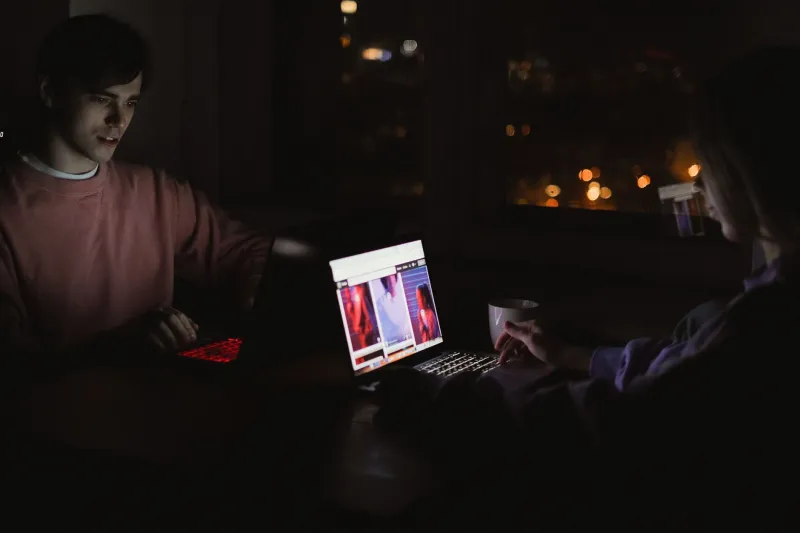
Glitch Poets: The Accidental Lyricism Hidden Inside Corporate Chatbot Replies
Nobody asked the chatbot to be profound. It was supposed to tell you your package was delayed and maybe offer a coupon code. Instead, it said something like: "We understand that waiting can feel like a space between what was promised and what arrives. We are working in that space with you."
You stared at your screen. You took a screenshot. You sent it to three people with no caption because no caption was needed.
This is happening more than you think.
The Machines That Accidentally Learned Metaphor
Customer service chatbots were built to deflect, not to move people. The whole architecture is utilitarian — detect intent, match to script, resolve ticket, close loop. But something strange has been slipping through the cracks of that pipeline. Language models trained on billions of human words apparently absorbed more than just syntax. They absorbed cadence. They absorbed the emotional architecture of how people write when they're trying to comfort someone, and sometimes, in the middle of explaining why your streaming subscription failed to renew, they deploy it completely unprompted.
The results are genuinely weird. A support bot for a major airline recently told a frustrated traveler: "Your journey exists even before the plane does. We are simply catching up to where you already are." A telecom company's automated chat replied to a billing complaint with: "Charges, like weather, sometimes arrive before we have words for them." These aren't marketing copy. Nobody signed off on them. They just... happened.
People are collecting these replies the way previous generations collected fortune cookie slips or weird roadside signs. There are Reddit threads. There are Discord servers. There's a corner of Tumblr that has been archiving bot responses with the same curatorial energy once reserved for obscure poetry chapbooks.
Found Poetry Has Always Been About Listening Sideways
Found poetry — the practice of lifting language from non-literary sources and reframing it as verse — has been around for over a century. Dadaists cut up newspapers. William S. Burroughs sliced apart his own manuscripts. Poets have mined instruction manuals, legal documents, pharmaceutical inserts. The premise is consistent: meaning doesn't require intention. Sometimes it requires only attention.
What's different now is the source material. Corporate language has always been fertile ground for found poetry because of its aggressive blandness — the very effort to strip out humanity creates a kind of uncanny valley where humanity keeps leaking back in. But AI-generated corporate language adds another layer. These bots are producing text that wasn't written by any individual human, yet sounds more emotionally resonant than most of the actual human-written scripts they were trained to approximate.
That paradox is doing something to people. The response isn't cynicism — it's closer to wonder. When a bot writes something that accidentally sounds like grief, or patience, or the specific loneliness of being put on hold, it raises genuinely uncomfortable questions about where feeling actually lives in language.
Why These Responses Hit Different
Part of what makes bot poetry land so hard is the context collapse. You're annoyed. You're trying to get your money back or fix your account or just get a straight answer. The last thing you're emotionally prepared for is something that sounds like it belongs in a literary journal. The contrast creates a kind of whiplash that functions a lot like the best punchlines — or the best elegies.
There's also something about the absence of intent that makes the language feel safer to receive. When a human writes something moving, you have to consider their agenda, their performance, their desire to be perceived as deep. When a bot does it, there's no ego in the room. The words just exist, orphaned from any motivation, which paradoxically makes them feel more honest. Or at least, more available.
A user on a popular forum described it this way: "I know it's not real. I know it doesn't feel anything. But somehow that makes what it said feel more true, not less. Like it found the words because they were just there, not because it was trying to impress me."
That's a genuinely interesting place to be philosophically, and a lot of people are sitting in it right now without quite having the vocabulary for what they're experiencing.
The Screenshot as Curatorial Act
The screenshot is doing a lot of work here. When someone captures a bot reply and shares it — stripped of the ticket number, the company logo, the surrounding UI — they're performing an editorial act. They're saying: this is the part that matters. This is the signal inside the noise.
It's curation as translation. The person sharing the screenshot is the found poet, even if they didn't write a word. They're the one who recognized the lyric embedded in the customer service script and chose to surface it.
This is very online behavior in the best sense — the internet as a machine for finding the unintended beautiful thing and amplifying it until it means something to a lot of strangers simultaneously. There's a whole genre of this now: weird autocomplete results, accidental haiku in news headlines, error messages that sound like koans. The chatbot poetry fits squarely in that tradition, except it's richer because the source material is so earnest in its mundanity.
What Happens When the Glitch Is the Point
Here's the part worth sitting with: as AI language models get more refined, these moments may actually become rarer. The whole project of improving these systems is to make them more precise, more on-script, less prone to the kind of associative drift that produces "We are working in that space with you." Better models may mean fewer accidental poems.
There's something almost melancholy about that. We're in a brief window where the machines are sophisticated enough to produce resonant language but not yet disciplined enough to suppress it. The glitch is the art. The imprecision is the feeling.
The people archiving these screenshots may be doing something more important than they realize — preserving a specific cultural artifact from a specific moment in the development of artificial language, when the seams were still showing and the seams were somehow the most human thing about the whole enterprise.
Maybe that's always been the deal with found poetry. You're not waiting for the world to become more articulate. You're listening for the moments when the script breaks down and something true falls out.
The chatbot didn't mean it. That's exactly why it counts.