Hey Bestie, It's Target: The Weird Science of Brands That Text Like They Miss You
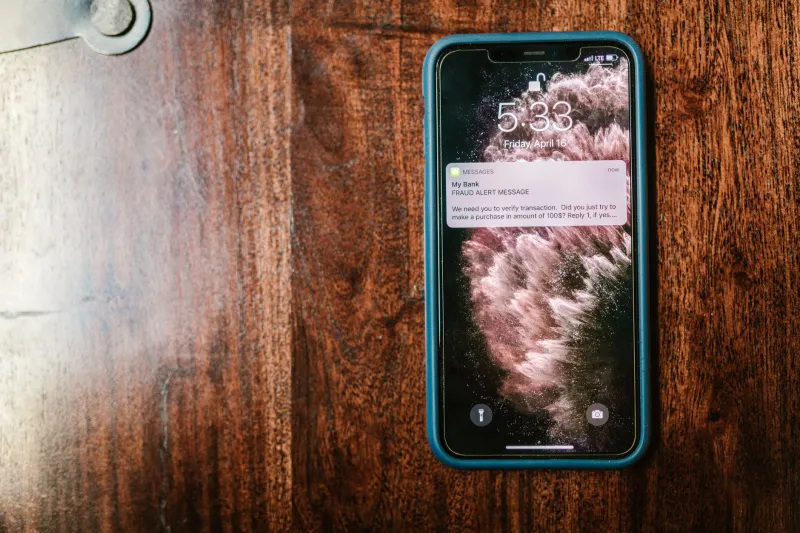
Your phone lights up. The preview reads: "We noticed you haven't stopped by in a while 👀 — we saved something for you." Your chest does a small, embarrassing thing. You feel, briefly, seen. Then you realize it's a Sephora push notification and you've been emotionally manipulated by a beauty retailer's CRM software at 11:43 on a Tuesday.
Welcome to the uncanny valley of corporate intimacy — a place where the signal breaks just enough that you can't tell whether something was written for you or at you.
The Casual Tone Didn't Happen by Accident
There was a specific moment — sometime around 2017, 2018 — when brands collectively decided that professionalism was the enemy of connection. Out went "Dear Valued Customer." In came lowercase letters, em dashes, and the kind of breezy conversational energy that felt like a text from your most effortlessly cool friend.
Domino's started tracking your pizza like it was a person with a journey. Netflix sent you "We think you'll love this" recommendations that landed with the confidence of someone who's known your taste for years. Duolingo became a meme because its owl would guilt-trip you about missing a Spanish lesson with the emotional precision of a disappointed parent.
None of this was accidental. It was — and still is — the product of enormous amounts of behavioral data, A/B testing, and something the marketing industry calls personalization at scale. Which is a phrase that should feel contradictory but somehow doesn't anymore.
What They Actually Know About You
Here's the part where things get interesting. When a brand texts you something that feels weirdly specific — a reminder about the exact product you browsed twice but never bought, or a "just checking in" message that arrives right when you've been inactive for exactly 14 days — that's not a coincidence. That's a trigger.
Modern customer engagement platforms like Klaviyo, Attentive, and Salesforce Marketing Cloud allow companies to build what are essentially behavioral flowcharts for millions of individual users simultaneously. Your inactivity window, your browse-to-purchase ratio, your category affinity, your time-of-day engagement patterns — all of it feeds into automated message sequences designed to fire at the exact psychological moment you're most likely to respond.
The message that says "hey, we haven't seen you" was never written for you. It was written for a segment — a cluster of users whose data profile matches yours closely enough that the same words will probably land the same way. You are, in the most clinical sense, a data point being addressed by a probability.
And yet. It kind of works.
The Uncanny Valley Has a Subscription Model
There's a concept in robotics called the uncanny valley — that creepy dip in comfort that happens when something looks almost human but not quite right. The theory is that near-human things trigger a kind of low-level dread, a recognition that something is off even when you can't name what.
Brand communication has built its own version of this valley, except it runs in reverse. Instead of discomfort, the near-human feel of a well-crafted SMS from Target produces something closer to warmth. The message doesn't need to be actually personal to feel that way. It just needs to be personal enough — specific enough, casual enough, timed well enough — to trip the wire in your brain that registers connection.
This is the space where Loyeyvk lives, honestly. Where the signal breaks and meaning begins. Where something generated for thousands of people somehow lands like it was meant only for you.
Why We Trust the Machine That Simulates Understanding
The deeper question isn't really about marketing. It's about what we're actually looking for when we respond to this stuff.
In a cultural moment defined by loneliness metrics, declining social trust, and the slow collapse of third spaces — the bar for feeling acknowledged has gotten genuinely low. A push notification that says "you deserve a treat" from a coffee app is competing, psychologically, with actual human connection. And in some tired moments, it wins.
Researchers studying parasocial relationships — the one-sided emotional bonds people form with celebrities, influencers, and fictional characters — have started applying the same frameworks to brand relationships. When a company's communications are consistent enough, warm enough, and specific enough over time, users begin to develop something that functions like trust. Not the kind you'd extend to a friend, but not nothing, either.
Starbucks has a name for your order. Spotify made you a playlist for your mood. Airbnb sent you a birthday message. These aren't gestures of care — they're retention mechanics. But the feelings they produce are real, even if their origins aren't.
The Copywriter in the Machine
There's a human somewhere in all of this, which is worth remembering. The voice you read in those notifications — the breezy, lowercase, emoji-adjacent tone — was crafted by actual people. Brand strategists, UX writers, content designers who spent real time thinking about how a sentence should feel in someone's hand at 7am.
What's strange is that their work is then handed to an algorithm that deploys it without context, without care, without any actual knowledge of you. The warmth is genuine in its construction and hollow in its delivery. It's a recorded hug. A simulation of someone who thought about you, sent by a system that never has.
Some brands are now layering generative AI into this process — using large language models to dynamically adjust message tone, content, and even humor based on individual user profiles. Which means the copy you receive might not have been written by a human at all. Just a system trained on human warmth, mimicking it back at you.
So What Do We Do With This
Nothing about this is necessarily sinister. Companies want your attention and your money — that's always been true. The methods have just gotten more fluent in the language of intimacy.
But it's worth sitting with the strangeness of it. The fact that a well-timed text from a brand you barely think about can produce a genuine emotional response says something — not about the brand, but about us. About how much we want to be known, how quickly we'll accept a simulation of it, and how little signal it takes to make meaning feel real.
Next time your phone buzzes and your stomach does that small hopeful thing, take a second before you open it. Not because you shouldn't buy the thing. But because the gap between what that feeling is and what caused it is one of the more honest windows into this particular moment we're all living in.
The notification doesn't know you. But it knows enough. And somehow, that's almost the same thing.