Typos on Purpose: How Messy Writing Became the Internet's New Honesty Signal
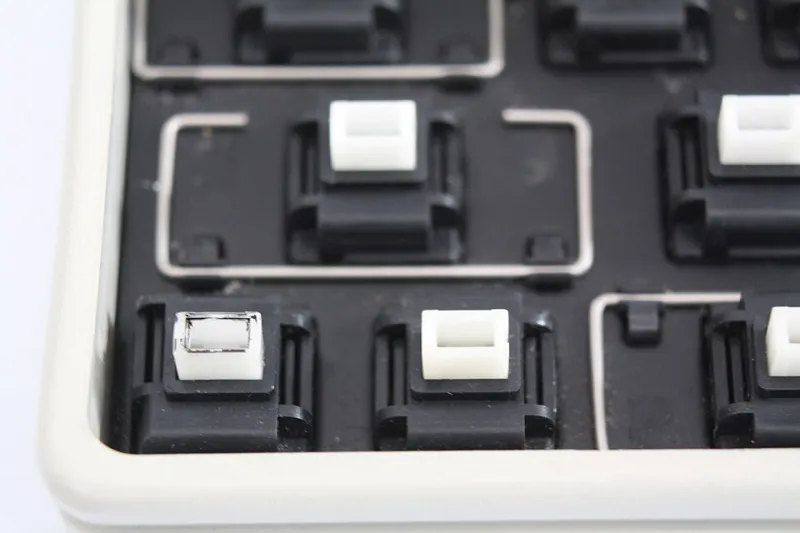
Photo: snuci, Public domain, via Wikimedia Commons
There's a specific kind of comment that stops you mid-scroll. It reads something like: "omg i sobbed so hard abt this ur insane for posting this at 2am bestie." No capitals. Rogue abbreviations. The punctuation situation is, by any traditional measure, a disaster. And yet — it feels more real than almost anything else on your feed.
That feeling isn't accidental. It's the whole point.
The Grammar Rebellion Nobody Named
Over the last couple of years, a quiet but persistent shift has been happening in how younger people — mostly Gen Z and the younger edge of millennials — write online. The drift isn't toward laziness, exactly. It's toward something more deliberate: a cultivated messiness that signals, loudly, I am a person and not a machine.
It shows up everywhere once you start noticing it. Discord servers where entire communities communicate in lowercase as a kind of ambient aesthetic. Indie blogs where the author misspells words in ways that are just slightly too consistent to be accidents. Reply-guy culture on X (still Twitter in everyone's heart) where the funniest responses are often the ones that look like they were typed with one eye closed.
The signals are subtle but legible to anyone tuned into the frequency. A misplaced comma that carries emotional weight. An ellipsis stretched to four or five dots. The word "literally" deployed as punctuation rather than modifier. These aren't errors. They're vocabulary.
When Polish Became a Red Flag
To understand why imperfection reads as authentic right now, you have to understand what perfection has come to represent.
AI-generated content has flooded almost every platform in the last two years. Blog posts, social captions, even personal essays — a huge chunk of what circulates online now has the same smooth, frictionless quality. Correct grammar. Balanced sentence structure. Appropriate paragraph breaks. It reads fine. It reads like nothing.
People clocked this fast. The internet, whatever else it is, has always been good at pattern recognition. And the pattern that emerged was clear: polished writing increasingly means nobody wrote this. Or at least, nobody with skin in the game.
"There's a version of 'correct' that just feels corporate now," says one user who runs a small creative writing community on Discord with a few hundred members. "When someone posts something and it's perfectly formatted with zero typos, my first instinct is suspicion. Which is a wild thing to say, but here we are."
Here we are, indeed.
The Linguistics of Being Human
What's fascinating from a cultural standpoint is that this isn't entirely new — it's a revival with new stakes. Early internet communication was messy by necessity. Bandwidth was limited, keyboards were awkward, and nobody was optimizing for engagement metrics. The typos and abbreviations of AIM and early texting culture were just... how people talked.
Then came the professionalization of the internet. Personal brands. Content strategies. The algorithmic pressure to be legible, shareable, and frictionless. Writing online gradually got smoother, more calculated, more performatively confident. The rough edges got sanded off.
Now those rough edges are back — but they're intentional. They're load-bearing.
Linguists who study digital communication have a term for this kind of thing: orthographic styling. The deliberate manipulation of spelling and punctuation to convey personality, emotion, or group membership. It's not new as a concept, but the specific cultural function it's serving right now — as a human authentication signal — is something genuinely different.
The lowercase aesthetic, for instance, communicates a specific emotional register: something between vulnerability and casualness, a refusal to perform authority. Capitalization, in this context, can feel aggressive or corporate. Typing in all-lowercase says I'm not trying to impress you. Which, paradoxically, is impressive.
Where the Messiness Lives
Not every corner of the internet is participating equally. The deliberate-typo culture is most alive in spaces that have, to some degree, resisted full mainstream colonization.
Discord is a big one. Server cultures develop their own internal dialects fast, and many of them skew heavily toward lowercase, clipped sentences, and phonetic spelling. Tumblr, perpetually dying and perpetually not dead, has been doing this for years — the platform practically invented the art of the emotional run-on sentence with zero punctuation.
Indie blogs and newsletters are another hotbed. Writers who are specifically positioning themselves against the AI-smoothed content landscape are leaning into voice quirks, unconventional structure, and yes, the occasional deliberate misspelling, as proof of presence. It's a signature in the oldest sense: something a machine couldn't perfectly replicate.
Even some corners of TikTok's comment culture have gotten in on it, though TikTok's scale makes everything messier to track. The videos themselves might be highly produced; the comments underneath are frequently feral in the best possible way.
The Signal in the Static
What all of this points to is something worth sitting with: we've entered a moment where the markers of human communication are actively being reclaimed because they were at risk of being lost.
When everything can be generated, generated-looking things lose value. The stuff that can't be easily faked — the idiosyncratic comma placement, the inside-joke abbreviation, the typo that's somehow also a perfect word — becomes precious. It's the digital equivalent of handwriting in an age of print.
There's also something almost political about it. Algorithmic platforms reward content that performs well, which means content that's legible, optimized, and frictionless. Choosing to write badly — deliberately, joyfully badly — is a small act of refusal. It says: I'm not optimizing for you. I'm talking to people.
The signal breaks, and the meaning begins. That's kind of the whole thing.
Whether this stays countercultural or gets absorbed into the content machine ("authentic messiness" as a brand strategy is already a sentence that exists) remains to be seen. But for now, in the spaces where it lives, a typo is worth a thousand perfect sentences. It means someone was actually there.