Songs You Didn't Know You Were Confessing: The Secret Autobiography Living in Your Playlists
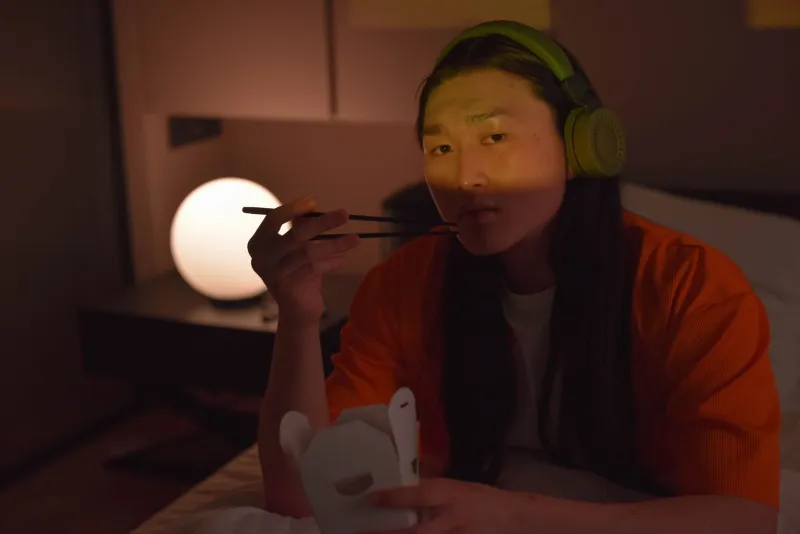
There's a playlist on your Spotify right now that you haven't shown anyone. Maybe it has a weird name — something vague like "idk" or "for the drive" or just a string of emojis that made sense at the time. Maybe it has no name at all. But if someone sat down and listened to it front to back, they'd probably know something about you that your closest friends don't.
That's the thing about playlists. They're not curated the way your Instagram grid is. They're not edited the way your texts are before you hit send. They accumulate. They mutate. They carry the fingerprints of who you were at 11pm on a Tuesday when something was wrong but you couldn't explain what.
We're living in an era of obsessive self-documentation — journals, therapy TikToks, personality tests, love languages — and somehow the most honest record most of us are keeping is the one we never meant to keep at all.
The Playlist as Emotional Timestamp
Music therapists have known for a long time that the songs people return to aren't random. There's a concept called "music-evoked autobiographical memories" — basically, the brain tags certain songs to specific emotional states, relationships, or turning points. The song doesn't just remind you of a moment. In some neurological sense, it is the moment, preserved in a way that language rarely manages.
When you add a song to a playlist, especially impulsively — late at night, mid-commute, right after a conversation that left you unsettled — you're essentially bookmarking an emotional state before you've had the chance to intellectualize it. The conscious brain hasn't caught up yet. The playlist has already filed the paperwork.
This is why looking back at old playlists can feel genuinely disorienting. You'll scroll through something you made two years ago and suddenly remember not just what was happening, but how it felt. The sequence of songs maps onto a psychological arc that you were living through in real time without fully understanding it.
What the Data Actually Sees
Data scientists who study streaming behavior describe listening patterns as one of the richest behavioral datasets that exists. Not because of what any single song means, but because of the relationships between choices — tempo shifts, genre jumps, the ratio of familiar songs to new discoveries, how often you abandon a track halfway through.
Think about what it means when someone's playlist gradually migrates from high-energy pop to slower, more introspective indie folk over the course of a few months. Or when someone who never listened to country music suddenly has three Morgan Wallen tracks buried in a workout playlist. Or when a person starts skipping the verse on a song they used to play on repeat — still keeping it, but not quite ready to hear it fully anymore.
These micro-decisions aggregate into something that looks a lot like a psychological portrait. Streaming platforms know this, obviously — it's why their recommendation engines can sometimes feel unnerving in how accurately they anticipate your next emotional state. But the portrait they're building is almost always more honest than the one you'd paint yourself if someone asked you directly how you were doing.
The Genre Shift as Identity Signal
One of the most telling things a playlist can reveal is a shift in musical identity — the moment when your taste starts quietly moving in a direction your social life hasn't caught up to yet.
A lot of people experience this during major life transitions. Moving to a new city. Ending a long relationship. Switching careers. Starting therapy. The playlist shifts before the person announces anything, sometimes before they've even admitted the change to themselves. They start gravitating toward music that reflects who they're becoming rather than who they've been, and for a while, the playlist is the only place that new identity gets to exist.
Music therapists describe this as a kind of "sonic rehearsal" — trying on emotional states through music before you're ready to claim them out loud. The playlist becomes a low-stakes space for identity experimentation. Nobody has to know you've been listening to ambient electronic music for six weeks straight. Nobody has to know what that means about where your head is.
Except, of course, Spotify knows. And somewhere, quietly, you know too.
The Songs You Keep but Never Play
Here's a detail that gets overlooked: the songs you add and then never listen to again.
Every playlist has them — tracks that made complete sense in the moment you added them and now sit there like artifacts from a previous version of yourself. You don't delete them. You just scroll past. There's something almost archaeological about this. Those songs are evidence of a specific emotional moment that has since resolved, transformed, or been deliberately set aside.
Deleting them would feel like a small erasure. Keeping them feels like acknowledgment. So they stay, and the playlist becomes a kind of layered document — part present tense, part archive, part unfinished business.
This is actually something music therapists sometimes work with intentionally. Asking someone to build a playlist and then talk through why certain songs are in there — not just the ones they love, but the ones they've kept without quite knowing why — can surface emotional material that traditional talk therapy takes much longer to reach. Music bypasses the verbal defenses we've built up. The playlist already did the confessing. The therapy session just translates it.
The Playlist You Made for Someone Else
And then there are the playlists built around another person.
The road trip playlist that was really a love letter. The breakup playlist that was more about grief than anger. The "songs that remind me of you" folder that you never shared, and now the relationship is over, and the folder still exists, and you genuinely don't know what to do with it.
These are some of the most emotionally dense objects a person can possess, and they live in a streaming app next to your gym playlist and the one you made for a dinner party three years ago. There's no ceremony around them. No ritual for what to do when they've outlived their context. You just carry them.
In that way, playlists are maybe the most honest form of memoir most of us will ever produce — not because we sat down to write one, but because we couldn't stop ourselves from leaving a trail.
Reading the Signal
There's something fitting about the fact that one of the most revealing documents of your inner life is stored on a platform designed primarily to serve you ads and keep you subscribed. The signal was always there. It just took someone — or something — paying close enough attention to notice.
Maybe that's worth sitting with the next time you open Spotify. Before you hit shuffle, before you let the algorithm take over — look at what you've built. The names you gave things. The sequences that don't quite make sense anymore. The songs you added at strange hours for reasons you've half-forgotten.
That's not just a playlist. That's you, talking to yourself in the only language that felt safe at the time.